
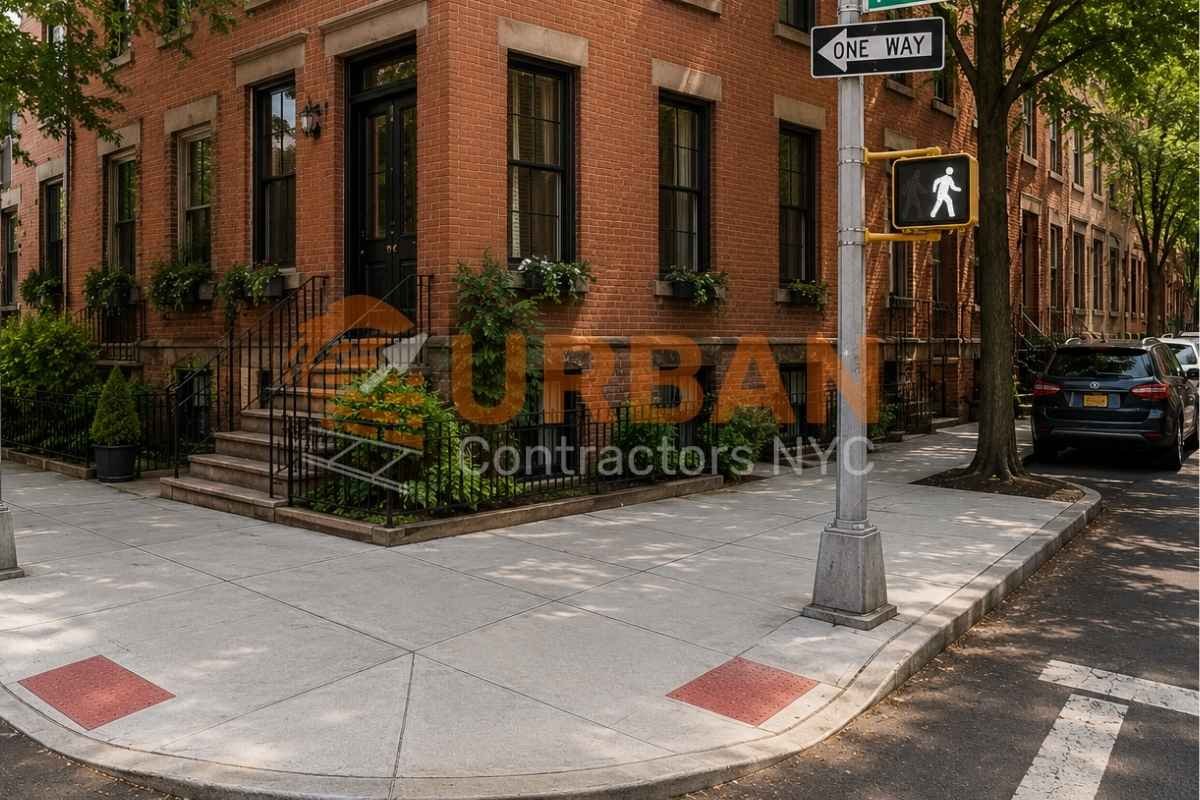
Do Corner Homes Need Multiple Sidewalk Repair Permits?
If you own a corner property in New York City, the permit question is one that tends to catch a lot of homeowners off guard. You've got sidewalks running along two different streets, so naturally you start to wonder: Does that mean double the paperwork? The short answer is it depends, and getting it wrong can cost you time and money.
Let me break it down so you know exactly what you're dealing with before a single concrete slab gets touched.
Why Permits Matter in NYC
Under Section 19-152 of the New York City administrative code, the responsibility for sidewalk maintenance falls squarely on property owners. If your sidewalk has cracks, uneven panels, or anything that creates a trip hazard, it's your job to fix it, not the city's.
Before any repair work can begin, you'll need a sidewalk repair permit from the NYC Department of Transportation (DOT). This permit gives you or your contractor the legal green light to break up and replace the concrete. In some cases, if tools, materials, or equipment need to be staged in the street, a second permit for occupying public space may also be required.
Skipping the permit process is a gamble you don't want to take. The consequences can include fines, violations, or being forced to tear out completed work and start over.
Do Corner Properties Need Extra Permits?
Here's where things get a little complicated. Corner properties front two different streets, which raises a fair question: does the DOT treat those sidewalks as one project or two?
The answer hinges on how the city classifies your property.
- If your property touches two different streets with separate block numbers or street names, the DOT will likely require a separate permit for each side.
- If both sidewalks fall under the same block and lot number as a single property frontage, one permit may cover the entire job.
This is exactly the kind of detail that trips homeowners up and exactly why working with an experienced and licensed sidewalk expert near you like Urban Contractors NYC makes a real difference.
When Two Permits Are Needed
Expect the DOT to require two permits if
- Your property sits on two different streets.
- Each sidewalk has its own street name or address range.
- The property spans two block numbers or lot IDs.
- Inspectors have listed damage on each side separately in their Property Inspection Reports (PIR).
In these situations, the DOT treats each sidewalk as its own independent project. That means separate permits and, in some cases, separate inspections for each side.
When One Permit Covers It All
Not every corner property triggers a two-permit requirement. If both sidewalks are recorded under the same block and lot, the DOT may issue a single permit that covers everything in one shot.
That means less paperwork, reduced costs, and a smoother overall process. Your contractor can handle both sides under a single job without juggling two separate inspection schedules.
That said, don't assume, always confirm the classification with the DOT before submitting your application. A wrong guess here can result in delays or a rejected permit.
Conclusion
So, one permit or two? It comes down to how the DOT classifies your sidewalks. If both sidewalks are treated as one frontage, a single permit may be all you need, and if the DOT views each street-facing side as its own project, two permits will be required.
Either way, the smartest move is to verify before you start. And if navigating city permits and DOT compliance sounds like more than you want to take on, the professionals at Urban Contractors NYC can handle it for you. They'll secure the right permits, make sure the work meets DOT standards, and get your sidewalks repaired without the stress or the risk of costly fines down the road.