
How Much Does Masonry Work Cost in NYC? A Complete 2026 Guide
Most masonry work in NYC costs between $8 and $80 per square foot, depending on the service. Small repairs run about $1,000 to $1,500, chimney repair runs from $1,500 to $8,000, and a full facade project is priced case by case after an engineer inspects the building. Where your own job lands in those ranges comes down to the material, building height, accessibility, and whether the city requires permits or a sidewalk shed.
Below, you'll see what each common service costs, which ones tend to stay affordable, which ones climb fast, and what you can do to keep the final bill reasonable.
NYC Masonry Costs at a Glance
Here is a quick look at typical pricing for the most common masonry services in the five boroughs.
Service | Estimated cost |
Brick pointing and tuckpointing | $10 to $30 per sq ft |
Brick repair and replacement | $35 to $80 per sq ft |
Stone masonry repair | $30 to $80 per sq ft |
Brownstone restoration | $25 to $75 per sq ft |
Parapet wall repair | $150 to $400 per linear ft |
Window lintel and sill replacement | $1,500 to $8,000 per opening |
Stucco and parging | $8 to $20 per sq ft |
Chimney repair | $1,500 to $8,000 |
Facade repairs (Local Law 11) | Custom quote, based on your engineer's report |
Small repairs | $1,000 to $1,500 |
These are working ranges, not fixed prices. Two buildings on the same block can land at opposite ends of a range, and the next sections explain why.
Which Masonry Jobs Cost Less
The cheapest jobs share a few traits. They use common materials, cover a limited area, and don't require much scaffolding or special approval.
Stucco and Parging
Stucco and parging are the most affordable surface repairs on the list, at $8 to $20 per square foot. The material is inexpensive, the technique is well understood, and most jobs wrap up in 3 to 10 days. Parging is often used to patch and protect foundation walls, basement walls, and the lower sections of a building, so access is usually easy. That keeps labor costs down.
Pointing and Tuckpointing
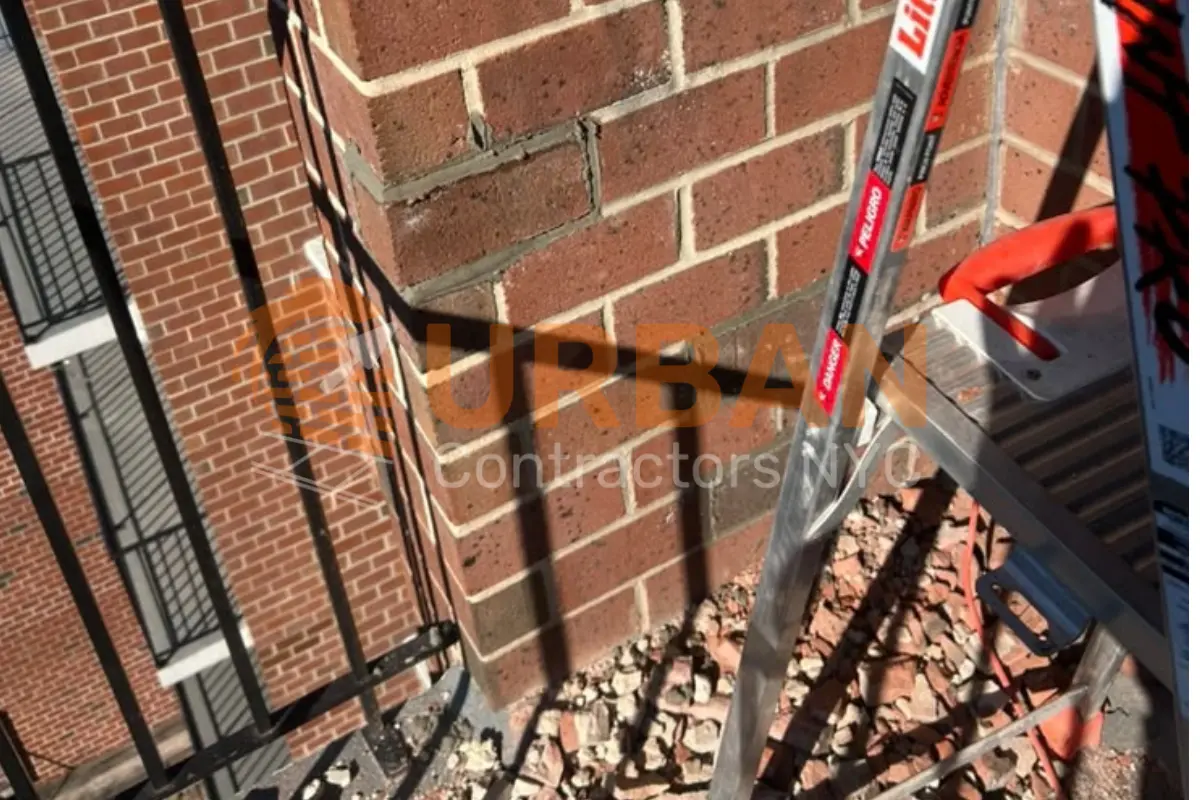
Pointing and tuckpointing cost $10 to $30 per square foot. You're not replacing brick here. You're grinding out failing mortar joints and packing in fresh mortar. It's the best value in masonry because it stops water from getting behind the wall before the damage spreads.
A 400-square-foot wall at those rates lands between $4,000 and $12,000. Skipping it can cost far more later, because water that gets into a brick wall can rot lintels, rust steel, and loosen entire sections of brick.
Worth knowing: in New York City, repointing is listed as work that doesn't require a Department of Buildings (DOB) work permit under the agency's Technical Policy and Procedure Notice 1/99, though other rules can still apply, especially for landmarked buildings and taller buildings.
Small repairs
A cracked step, a loose coping stone, or a few damaged bricks can often be handled in a single day, with pricing of about $800 to $1,500. Part of that figure covers getting a crew and materials to your address, which is why even a tiny job has a minimum.
The Mid-Range Jobs
Mid-range jobs involve real labor and material matching, which is why they cost more than pointing or stucco but far less than parapet or facade work.
Brick repair and replacement
Replacing damaged brick costs $35 to $80 per square foot, more than double the price of pointing. The difference is labor. A mason has to remove the damaged units, clean the cavity, match the new brick to the old, and lay it so the repair blends in. Matching is the tricky part on older buildings, where the original brick may no longer be made.
Chimney repair
Chimney repair ranges from $1,500 to $8,000 because the scope varies so much. A crown repair or a bit of repointing sits at the low end. A partial rebuild, new flashing, and a liner replacement sit at the high end. The work usually takes 1 to 5 days, but roof access and height can add time.
The Most Expensive Masonry Work
The following jobs sit at the top of the price range because they involve heavier materials, harder access, and more skilled labor, and in some cases the scope isn’t known until an engineer or crew opens up the wall.
Stone masonry and brownstone restoration
Stone repair costs $30 to $80 per square foot, and brownstone restoration costs $25 to $75. Stone is heavier, harder to cut, and harder to match. Brownstone is a soft sandstone that flakes and erodes when water gets in, so repairs often involve patching, replacing sections, or resurfacing, and each of those takes a skilled hand. These jobs usually take 1 to 3 weeks.
A 150-square-foot stone repair at those rates comes to $4,500 to $12,000.
Parapet wall repair
Parapets are priced by the linear foot, at $150 to $400. That number looks high until you consider the conditions. A parapet sits at the roofline, exposed to wind, rain, and freeze-thaw cycles, and it's often the first part of a wall to fail. The work requires roof access, safe staging, flashing, waterproofing, and sometimes a partial rebuild. A 20-foot section could cost $3,000 to $8,000, and the project may take 1 to 4 weeks.
DOB requires permits and special approvals for increasing the height of an existing parapet or installing a new parapet guardrail.
Window lintel and sill replacement
Lintels and sills run $1,500 to $8,000 per opening. A lintel is the support above a window or door, and when the steel inside it rusts, it expands and cracks the brick around it. Replacing one means temporarily supporting the wall above, so the job takes a few days per opening. Four failing lintels could total $6,000 to $32,000.
This one can involve paperwork since repairing or replacing lintels and relieving angles beyond certain limits requires a filing, while replacing masonry sills does not. Ask whoever is quoting the job to confirm this for your building.
Facade repairs under Local Law 11
This is the category with no fixed price, and it's the one that surprises owners most. Facade repairs under Local Law 11 are quoted individually because the scope comes from an engineer's report, not from a rate card. Projects take weeks to months.
The Facade Inspection and Safety Program, formerly known as Local Law 11, applies to buildings taller than six stories. DOB requires owners to have the exterior walls and appurtenances inspected every five years by a qualified professional and to file a technical report, as described on the DOB facade compliance page. The city kicked off the tenth cycle in early 2025, as per the DOB's newsletter, and filing deadlines are staggered by block number. If your report finds unsafe conditions, repairs aren't optional.
What Drives Masonry Costs Up in NYC
Several things can push a project to the top of its range, and often more than one is at work.
Height and access
The higher the work, the more it costs. Rooftop parapets, upper-floor lintels, and tall facades need scaffolding, swing stages, or hoists. Equipment rental, setup, and inspections all add up. A ground-level repair on a rowhouse and the same repair on the ninth floor are very different jobs.
Sidewalk sheds
When work happens over a public sidewalk, the city may require a shed to protect pedestrians. That's an extra cost and an extra permit. The rules have also tightened. Under the city's "Get Sheds Down" initiative, shed permits must now be renewed every 90 days, and owners must show that repair work is actually moving forward. DOB's rule on sidewalk sheds lets the city penalize owners who don't perform repair work during the permit period, starting with the second renewal. A project that drags on gets more expensive every month the shed stays up.
Landmark status
If your building is landmarked or sits in a historic district, repairs generally need approval from the Landmarks Preservation Commission (LPC). The city's guidance on landmarked properties lists masonry cleaning or repair as work that can require a Permit for Minor Work. The LPC also publishes a permit guidebook for restoration work that covers brownstone, brick, terra cotta, and stucco.
What does that mean for your budget? Landmark rules often call for matching mortar color, texture, and tooling and for using the original type of material. Those requirements slow the work and call for more specialized labor.
Material and matching
Common red brick is one thing. Historic brick, brownstone, limestone, and terra cotta are another. Rare or custom materials cost more to source, and matching an old finish takes more time at the wall.
Hidden damage
Masonry problems are rarely what they look like from the street. Once a crew opens up a wall, they may find rusted steel, rotted wood, or water damage deeper in. That's why a good estimate includes room for surprises and why pointing a wall early is cheaper than repairing it later.
Permits and engineering
DOB filings, engineer drawings, inspections, and LPC applications all cost money and take time. A small repair on a two-family home may need none of them. A larger job on a taller building may need all of them.
What Keeps Masonry Costs Down
A few smart moves can trim a bill without cutting corners.
Fix small problems early. Pointing at $10 to $30 per square foot is far cheaper than brick replacement at $35 to $80 and much cheaper than rebuilding a parapet. Water damage compounds.
Bundle the work. If you need pointing, a lintel replacement, and parapet work, doing them together means one setup of scaffolding and one mobilization. Scaffolding and access are some of the biggest line items.
Plan around the weather. Mortar and stucco need the right temperatures to cure. Spring through early fall usually gives crews the best conditions, though that's also when demand is highest. Scheduling early can help.
Get the scope in writing. A written scope should state the square footage, the materials, how the mortar will be matched, who pulls permits, and how hidden damage will be handled.
Don't delay required facade work. For buildings covered by the facade program, waiting can mean a longer shed rental, more penalties, and a larger repair later.
Ready to Get a Real Quote?
Numbers on a page are helpful, but your building is unique. The brick, the height, the street, the condition of the mortar, and the age of the building all shape what you’ll actually pay.
An inspection from licensed masonry experts at Urban Contractors NYC gives you a realistic idea of what your project will cost. We look at your property, tell you what needs fixing now and what can safely wait, and give you a clear written estimate with no surprises. Contact us today to schedule your inspection and start your masonry project on the right foot.