
A damaged brick pillar can stand out against an otherwise well-maintained property entrance. At 3135 Fairfield Ave in the Bronx, deteriorated and missing bricks near the metal entrance gate left part of the boundary wall looking uneven and unfinished. Urban Contractors NYC completed a localized brick replacement project to restore the affected section while preserving the appearance of the surrounding masonry.
The goal was straightforward: repair the damaged brickwork without unnecessarily disturbing the existing wall, decorative stone balusters, or metal gate. The project cost approximately $560, making targeted masonry repair a practical alternative to rebuilding the entire entrance pillar.
Project Overview
Project Type
Brick Replacement and Masonry Repair
Location
3135 Fairfield Ave, Bronx, NY 10463
Property Type
Residential, single-family attached home
Total Project Cost
Approximately $560
Main Issue
Missing and deteriorated bricks around the entrance pillar
Work Area
Localized section of the brick pillar beside the metal gate
Primary Objective
Restore the damaged masonry while maintaining a consistent appearance with the existing brickwork
The property at 3135 Fairfield Ave is a residential home in the Spuyten Duyvil area of the Bronx. Public property records describe it as a single-family home with a brick and stone exterior.
The front entrance features a red brick boundary wall, decorative light-colored stone balusters, and a black metal gate. The brick pillars provide structural support for the entrance arrangement and help create a consistent appearance across the frontage.
Because the entrance combines several materials, repairing the brickwork required attention to more than the damaged area alone. The replacement bricks needed to complement the existing masonry, while the mortar joints and finished surface needed to blend with the surrounding wall.
The Problem: Damaged Bricks Beside the Entrance Gate
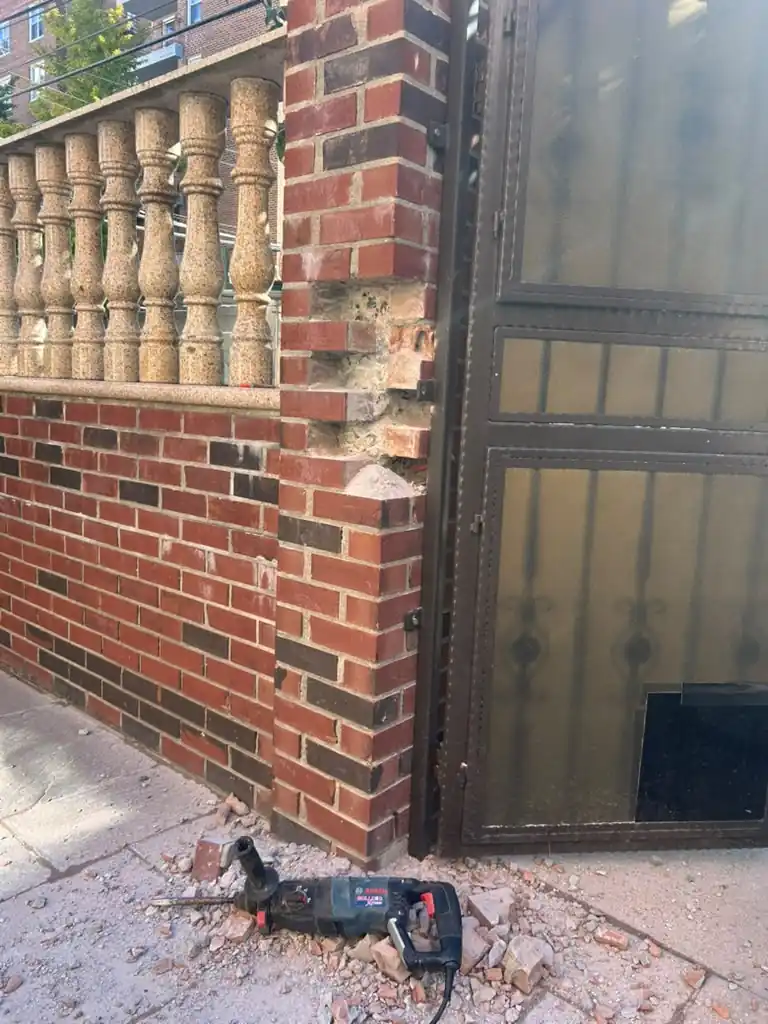
The before-repair photograph shows localized masonry deterioration on the brick pillar immediately beside the metal gate. Several bricks were missing or badly damaged, exposing the underlying masonry and leaving irregular gaps in the pillar.
The surrounding brickwork remained largely intact, making a targeted repair more appropriate than replacing the entire pillar based on the visible damage.
Leaving damaged masonry untreated can allow water to enter gaps and deteriorated mortar joints. In the Bronx, where exterior masonry is exposed to seasonal temperature changes, rain, snow, and repeated freeze-thaw cycles, moisture penetration can contribute to further deterioration.
The repair therefore needed to address the visibly damaged section while protecting the surrounding brickwork from unnecessary removal or disturbance.
Assessing the Damaged Masonry
The crew's first task was to identify the extent of the visible damage and determine where the brickwork needed to be removed.
The inspection focused on the missing and deteriorated bricks beside the entrance gate, the condition of the surrounding mortar joints, and the relationship between the damaged section and the intact portions of the pillar.
This assessment helps establish the limits of a localized repair. Removing only the affected masonry, where the surrounding material remains sound, avoids unnecessary demolition and helps preserve the original appearance of the entrance.
The crew also needed to account for the adjacent metal gate and the decorative masonry details when working around the pillar.
Selecting Bricks That Match the Existing Structure
Matching the replacement bricks was one of the most important parts of this project. A brick repair can be structurally sound but still look unfinished if the replacement units have noticeably different colors, dimensions, textures, or mortar joints.
The crew’s material-selection approach for this type of repair focuses on comparing the replacement material with the existing brickwork before installation.
- Color and tone: The existing wall features predominantly red and reddish-brown bricks, with darker accent bricks incorporated into the pattern. Replacement bricks should complement the dominant red tones and the surrounding masonry rather than introduce a noticeably different shade.
- Size and dimensions: Brick dimensions matter because even small differences can change the alignment of horizontal and vertical joints. The replacement units should fit the existing brick courses and maintain consistent spacing.
- Surface texture: Existing bricks have a weathered appearance that differs from the surface of newly manufactured units. Comparing their surface finish helps prevent the repaired section from appearing overly smooth or visually disconnected from the older wall.
- Mortar color and joint profile: Mortar occupies a significant part of the visible wall surface. Its color, thickness, and finish influence how well the replacement bricks blend with the surrounding courses. The repair should maintain the existing joint pattern as closely as practical.
- Durability and compatibility: Replacement materials should be suitable for exterior masonry and compatible with the existing brickwork and mortar. Using an inappropriate mortar or a material with significantly different characteristics can contribute to future masonry problems.
The objective is not simply to install new bricks. It is to make the repaired section look consistent with the existing entrance while maintaining appropriate masonry performance.
Removing the Damaged Bricks
Once the repair area was identified, the damaged masonry needed to be removed to create a suitable surface for replacement.
This stage requires care because excessive force can crack neighboring bricks or loosen mortar joints beyond the intended repair area. Around an entrance pillar, unnecessary damage can increase the amount of masonry that needs to be replaced.
A controlled removal process helps preserve the surrounding brick courses and keeps the repair limited to the affected section.
The crew also needed to work carefully beside the metal gate and its mounting hardware to avoid disturbing the entrance assembly.
Preparing the Area for Replacement
After removing the damaged material, the exposed area needed to be cleared of loose masonry fragments and unsuitable mortar.
Proper preparation is important because replacement bricks must sit securely in the repaired section. Loose debris, unstable material, or poorly prepared joints can interfere with bonding and affect the quality of the finished work.
The surrounding brickwork also needed to remain clean enough for the replacement section to align with the existing courses.
For a localized repair like this, preparation helps the crew avoid unnecessary changes to the rest of the wall.
Installing the Replacement Bricks
The replacement bricks were installed in the damaged portion of the pillar beside the entrance gate.
The key objective was to maintain the existing brick pattern and restore the continuity of the pillar. Each replacement unit needed to align with the neighboring courses, with mortar joints that followed the surrounding layout.
Careful placement is especially important at the corner of a pillar. This area is visible from multiple angles, and inconsistently aligned bricks can make a small repair stand out.
The repair also needed to preserve the pillar's relationship with the adjoining boundary wall and gate frame.
Finishing the Mortar Joints
Once the replacement bricks were in place, the mortar joints needed to be finished to complement the existing masonry.
Consistent joint thickness and a suitable finish help the repaired area blend with the surrounding brickwork. Excess mortar on the brick faces can also affect the appearance, particularly where the existing wall has a defined red-and-brown pattern.
The finished work needed to look appropriate beside the older masonry rather than resemble a separate patch added to the pillar.
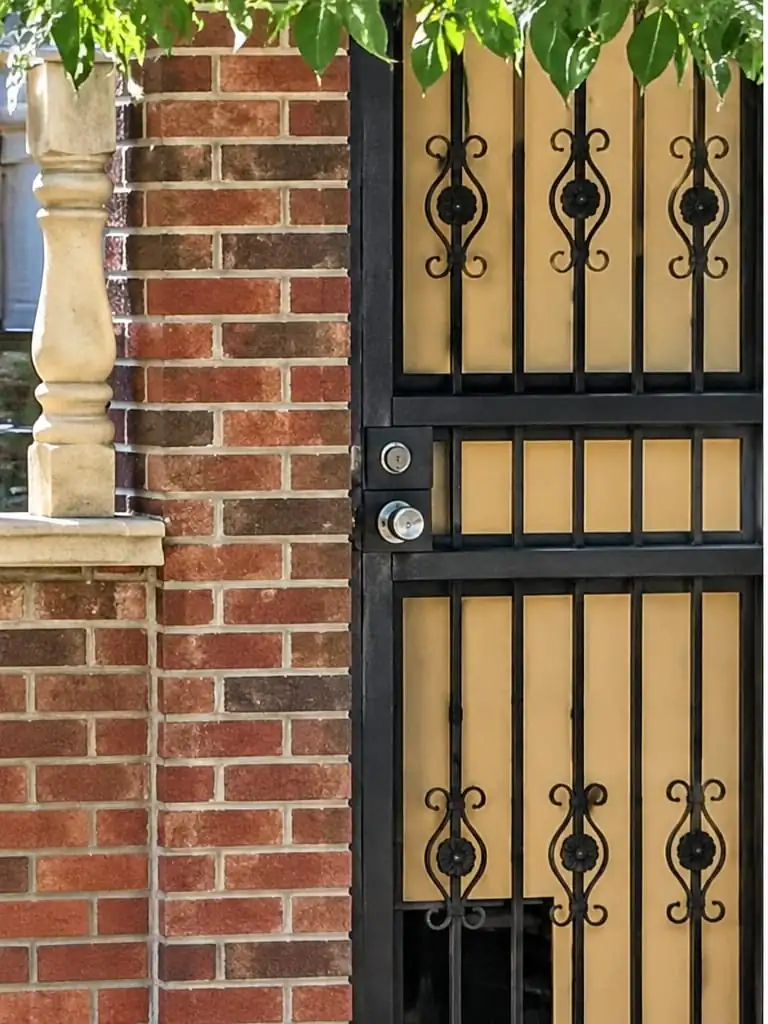
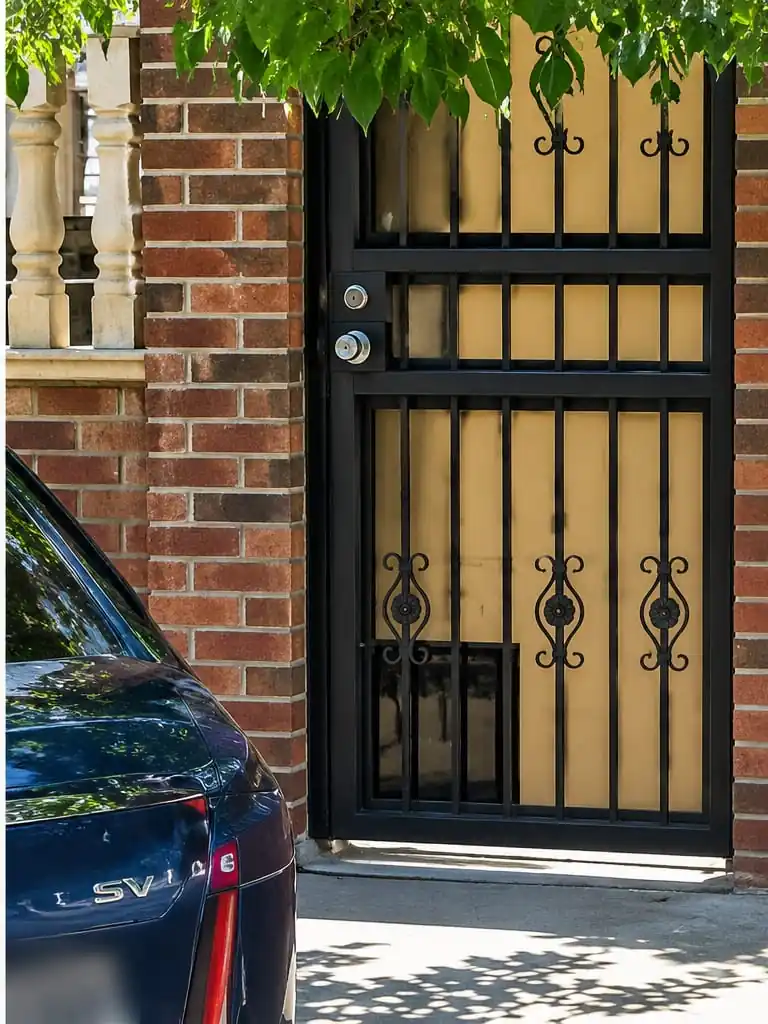
The after-repair photograph shows a clean, uniform brick surface around the entrance, with the pillar maintaining a consistent appearance alongside the metal gate and decorative balusters.
Reviewing the Completed Repair
The final review focused on the appearance of the repaired pillar and its relationship with the surrounding entrance.
The after photo shows the brickwork restored across the visible pillar, without the prominent gaps and exposed damaged areas seen in the before photo.
The repaired section complements the existing red brick wall, light-colored stone balusters, and black metal gate. The entrance retains its original design, with the work concentrated on the damaged masonry rather than extending across the entire boundary wall.
This is an important advantage of localized brick replacement: when the damage is limited, the contractor can address the affected area without undertaking a larger reconstruction project.
Project Outcomes
Before
The pillar beside the metal gate had missing and deteriorated bricks, exposed masonry, and damaged mortar joints. The defects interrupted the otherwise consistent appearance of the red brick entrance.
After
The repaired pillar presents a clean, uniform brick surface that complements the adjoining wall, decorative balusters, and black metal gate.
The comparison illustrates the value of matching replacement materials carefully and limiting repairs to the affected area when the surrounding masonry remains suitable for retention.
Need Brick Replacement in the Bronx?
Damaged bricks can affect the appearance of an entrance pillar, boundary wall, or exterior facade. The right repair approach depends on the extent of the damage, the condition of the surrounding masonry, and the need to match existing materials.
Urban Contractors NYC provides masonry repair and brick replacement services for property owners seeking targeted repairs that complement their existing structures.
If your property has cracked, missing, or deteriorated bricks, arrange an inspection to determine the appropriate repair scope and material requirements.