
Project Overview
Project
Sidewalk Violation Removal in Queens
Location
84-27 Smedley St, Jamaica, NY 11435
Property Type
Residential detached home/cornor property
Sidewalk Damage
Fifteen deteriorated concrete slabs affected by weed growth, regular pedestrian traffic, general wear and tear, and mature street tree growth
Total Repair Area
Approximately 375 sq. ft. across 15 sidewalk slabs
Services Provided
NYC sidewalk violation removal, damaged concrete demolition, authorized root pruning, root barrier installation, concrete replacement, control joint installation, broom finishing, curb cut installation, and detectable warning surface installation for an ADA-compliant sidewalk, plus permit coordination, dismissal inspection and final NYC DOT sign-off
Permits & Requirements
NYC DOT Sidewalk Construction Permit, Sidewalk Closing Permit, 811 utility mark-out ticket, applicable NYC Parks tree-work authorization, and DOB curb cut permits, as required
Project Cost
Approximately $6,200, including required permits
Project Timeline
Approximately 60 days, including permitting, tree-work coordination, construction, dismissal inspection, and final NYC DOT sign-off
The Challenge: Several Kinds of Wear Working on a Corner Sidewalk
The sidewalk outside 84-27 Smedley St in Jamaica didn't fail because of one problem. Fifteen slabs, covering roughly 375 square feet along both frontages of the corner property, had been worn down from several directions at once.
Weeds had rooted in the joints and hairline cracks, widening those openings a little more every growing season. Years of daily foot traffic and ordinary aging had broken down the concrete surface. A mature street tree nearby had also been pushing its roots outward, adding pressure beneath the slabs and leaving the walking surface uneven. Together, these conditions created defects serious enough to draw an NYC DOT sidewalk violation.
Because the home sits on a corner, the damage wasn't confined to a single straight run of sidewalk. It wrapped around the property, and the corner itself includes a curb cut that had to be brought up to current accessibility standards. Patching the cracks would have covered the symptoms while leaving the weed roots, the tree pressure and the curb conditions untouched.
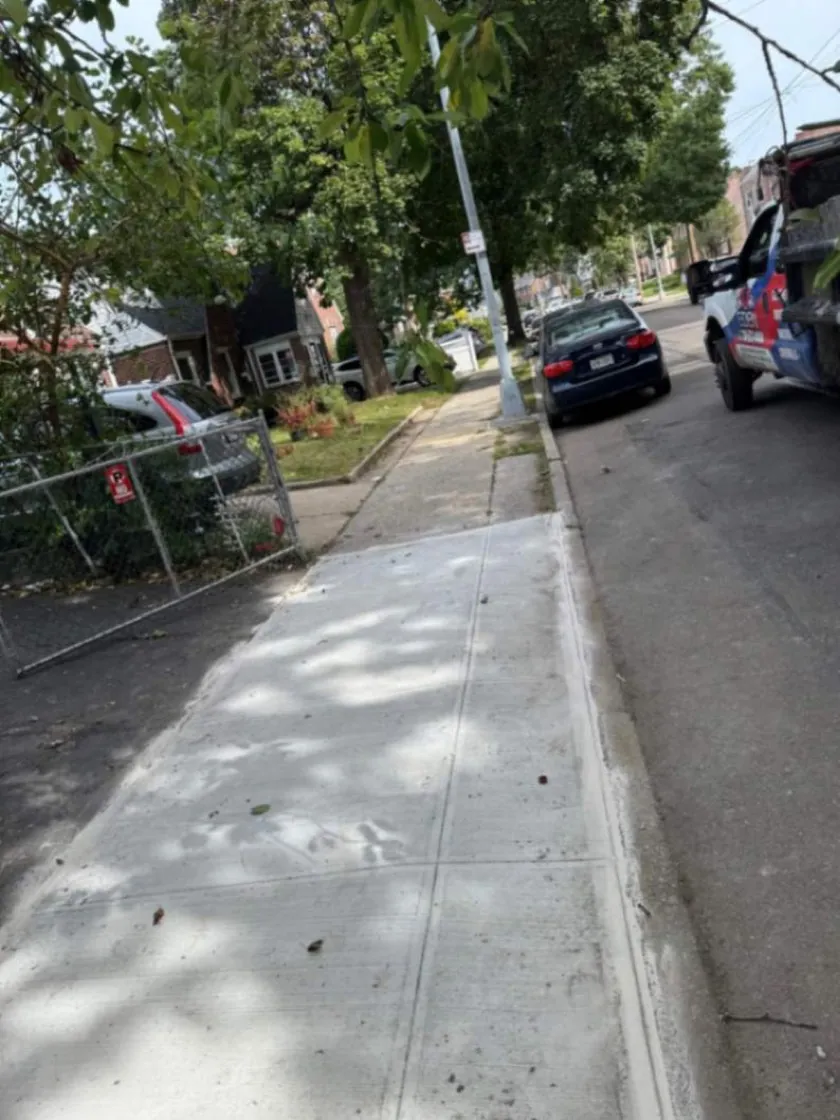
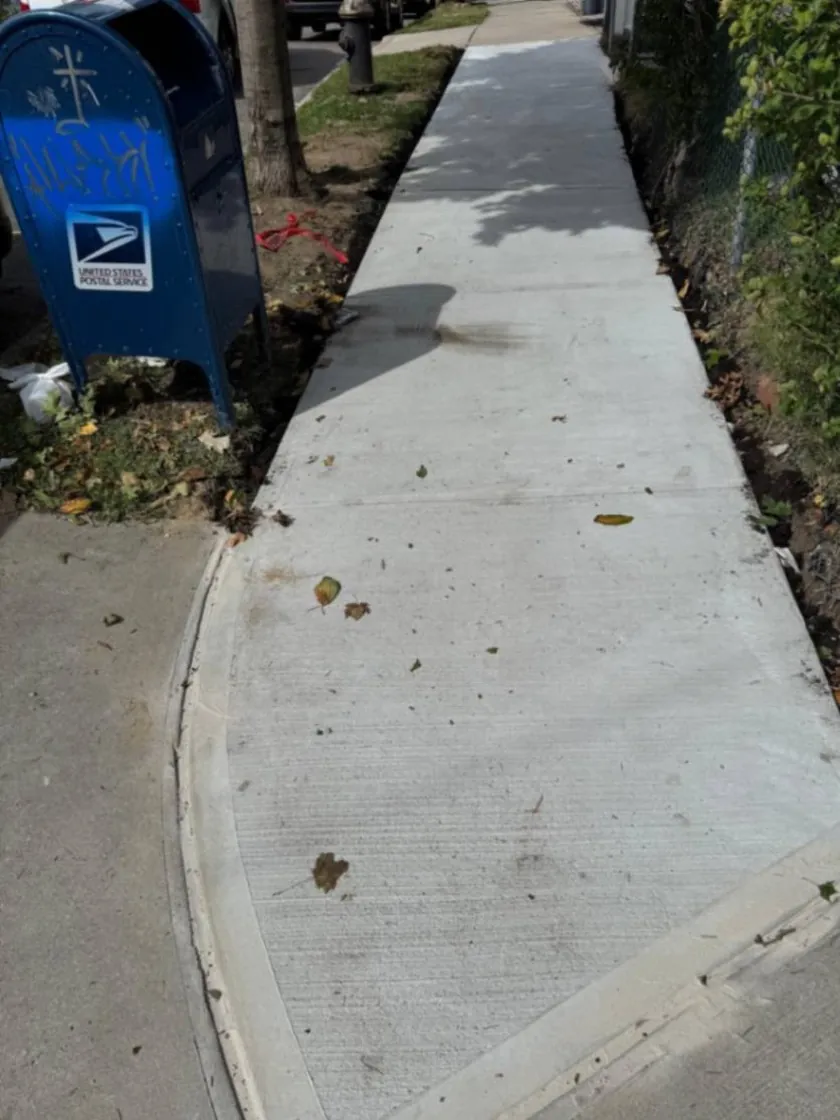
Our Approach
Urban Contractors NYC treated this as a full violation-correction and sidewalk reconstruction project. Three things had to be handled together: the damaged concrete along both frontages, the weed and root conditions underneath it, and the curb cut and accessibility requirements at the corner.
On-Site Assessment and Scope Confirmation
The team walked both frontages of the corner property and went through the sidewalk slab by slab. They marked where the damage came from weeds, where tree roots were involved, and where general wear had taken over. With fifteen slabs affected and weed intrusion running below the surface, the repair limits on each side were set before any permits were filed, so the approved scope would match the work the property actually needed.
Filing Permits and Scheduling Utility Mark-Out
Before demolition, the project needed a NYC DOT Sidewalk Construction Permit and a Sidewalk Closing Permit. Because the work extended along two sides of a corner lot, the permit scope was set up to cover both frontages. An 811 utility mark-out ticket was requested to confirm what was running beneath the sidewalk. Since the mature street tree was part of the problem, the crew also secured the applicable NYC Parks tree-work authorization in advance. The curb cut work called for DOB curb cut permits, coordinated as required, so each agency's approvals were in place before construction began.
Demolishing and Removing the Damaged Slabs
With approvals and utility clearance in place, the damaged slabs were broken out and hauled away. Removing the concrete entirely exposed what was happening below the surface: how far the weed roots had traveled and where the tree roots were pressing against the base. Decisions could then be made from what was actually underground rather than from assumptions.
Authorized Root Pruning Near the Street Tree
Root work near the street tree was performed under NYC Parks authorization. Only the roots interfering with the sidewalk base were addressed. The aim was to correct the sidewalk condition while protecting the tree's overall health and stability, which matters even more with a mature tree than a young one.
Installing a Root Barrier
A root barrier was placed between the tree's root zone and the new concrete. Mature trees keep growing and spreading, so replacing the slabs without a barrier would only invite the same uplift again. The barrier redirects future root growth away from the reconstructed sidewalk.
Grading and Prepping the Base
Once the old concrete, weed roots, and debris were cleared, the exposed area was leveled and compacted to create a stable, even base. A well-prepared base keeps new slabs from settling or cracking later, and it's the step most likely to be skipped on a quick patch job.
Pouring New Concrete
Fresh concrete was poured across the repair area, about 375 square feet in total. The new sections were tied into the surrounding undamaged sidewalk, including the turn at the corner, so the finished frontage reads as one continuous walking surface rather than a mix of old and new slabs.
Cutting Control Joints
Control joints were cut into the new slabs at standard intervals. They give the concrete planned places to shrink and move as it cures, which reduces the random cracking that contributed to this violation.
Applying a Broom Finish, Curb Cut and Detectable Warning Surface
Before the concrete cured, a broom finish was applied to give the sidewalk a slip-resistant texture. The curb cut was then installed and a detectable warning surface was added to provide an ADA-compliant crossing point. The textured surface gives pedestrians who are blind or have low vision a tactile cue at the transition between sidewalk and street.
Dismissal Inspection and DOT Sign-Off
Pouring the concrete didn't close the violation on its own. Once construction was complete, Urban Contractors NYC requested the dismissal inspection and coordinated with NYC DOT through final sign-off, confirming the violation had been fully cleared.
What Made This Jamaica Project Notable
Many sidewalk violations in Queens come down to a few cracked slabs along one straight frontage. This one took more planning for three reasons.
It Was a Corner Property With Two Frontages
Damage that wraps around a corner means more sidewalk to assess, more repair limits to define, and more to coordinate with the city. NYC DOT notes that work on more than one side of a corner property may require more than one sidewalk permit, so defining the repair limits correctly before filing was essential. Both frontages also had to meet at the corner as a single, continuous surface.
Weeds and a Mature Tree Were Damaging the Sidewalk Together
Weed growth and tree-root pressure are different problems with different fixes, and this property had both. Weeds loosen and widen cracks from the surface down, while a mature tree pushes up from below. Fixing one without the other would have left the sidewalk open to the same failure, which is why the project combined full slab removal, authorized root pruning, and a root barrier.
The Curb Cut and ADA Surface Added a Second Permit Track
Installing a curb cut and detectable warning surface meant the project involved more than standard sidewalk permits. DOB curb cut permits had to be coordinated alongside the DOT and NYC Parks approvals, and the finished crossing had to meet accessibility requirements. Sequencing those approvals so work could keep moving was as important as the concrete itself.
Project Results
By project close, all fifteen damaged slabs around 84-27 Smedley St had been replaced, resolving the weed-related cracking, general deterioration and tree-related pressure along both frontages.
- 15 sidewalk slabs replaced along both frontages
- Approximately 375 sq. ft. of new concrete
- Weed-damaged sections fully removed and rebuilt
- Authorized root pruning completed near the mature street tree
- Root barrier installed to help prevent future uplift
- Control joints cut and broom finish applied
- Curb cut installed
- Detectable warning surface installed for an ADA-compliant sidewalk
- All required permits coordinated, including DOB curb cut permits as required
- DOT dismissal inspection completed
- Final violation sign-off secured
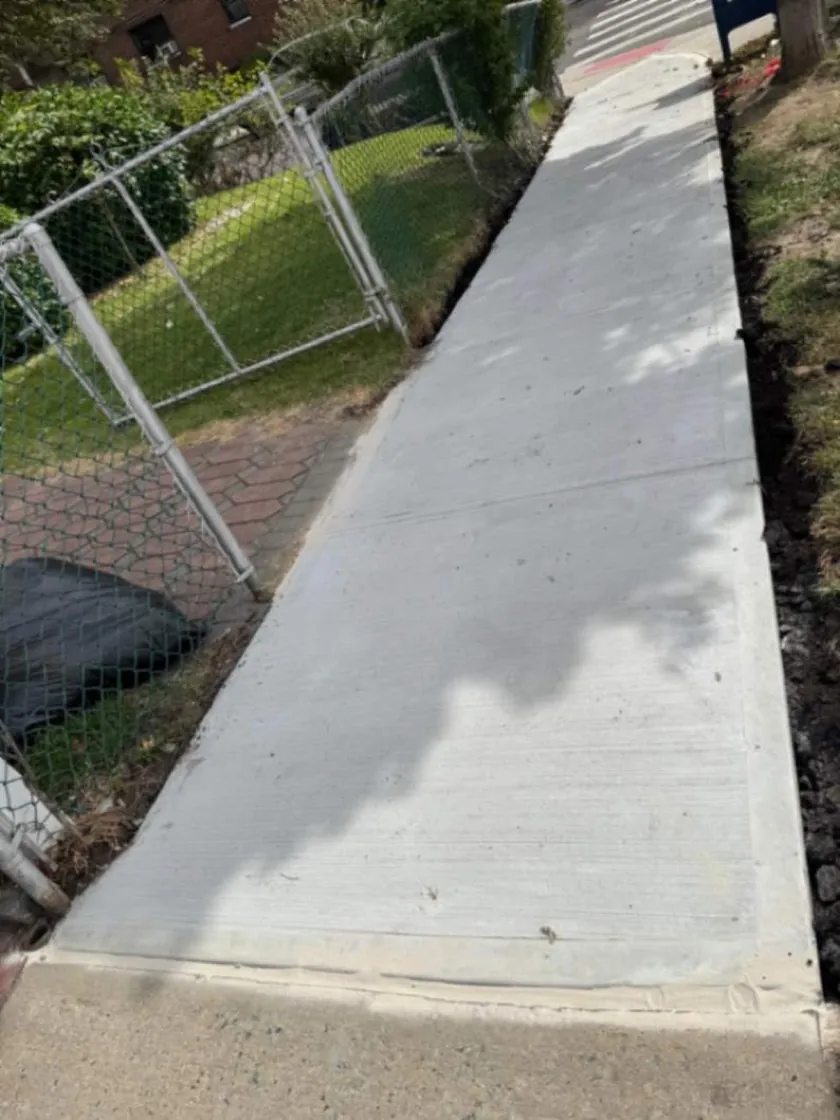
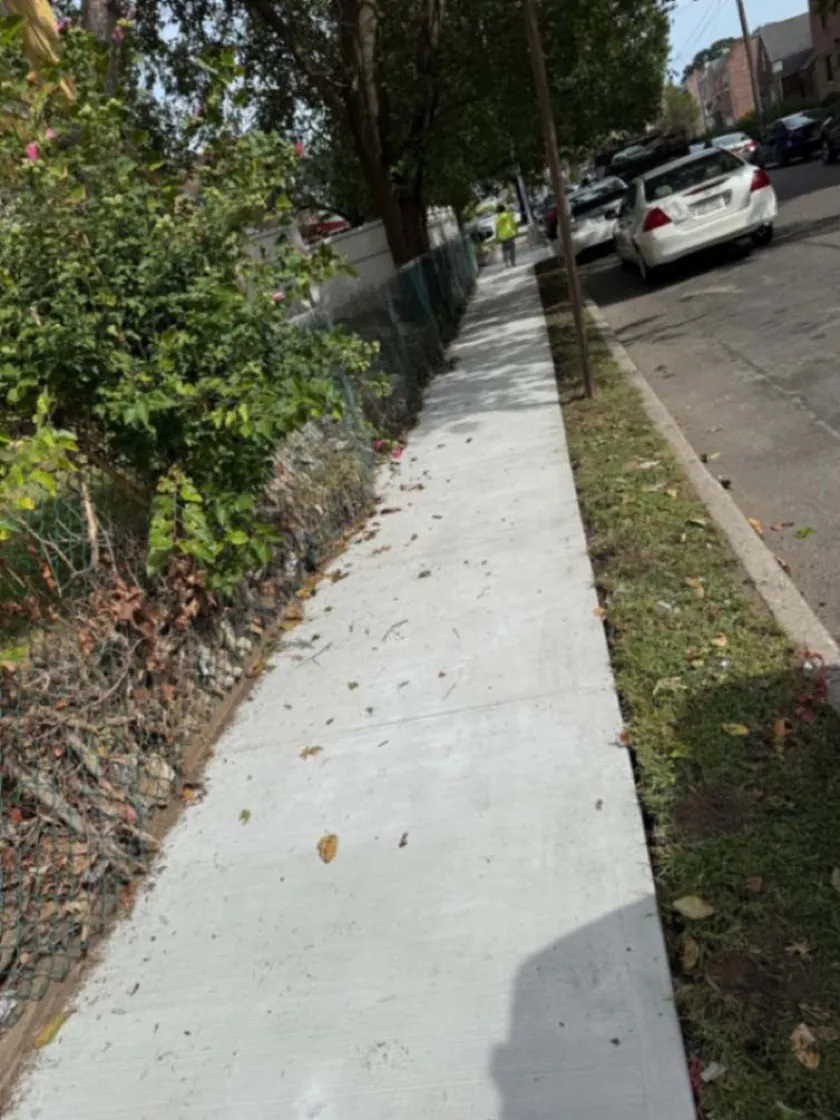
Total project cost came to approximately $6,200, including permits, with the full process from permitting through final sign-off taking about 60 days.
Client Testimonial
“We knew the sidewalk was in rough shape, but we didn't realize how much was going on: the weeds, the wear, the big tree out front, and damage on both sides of our corner. Add a curb cut and we had no idea where to begin with the permits. Urban Contractors NYC handled all of it, from the approvals and the root work to the concrete, the curb cut and the DOT sign-off. The sidewalk looks great and the violation is gone.”
Frequently Asked Questions
Fifteen damaged concrete slabs were replaced along both frontages of the corner property, covering approximately 375 square feet.
Several factors combined: weed growth in the joints and cracks, regular pedestrian traffic, general wear and tear, and pressure from a mature street tree.
Yes. Weeds and grass rooting into cracks and joints widen those openings over time. Combined with other wear, that damage can progress until it triggers a DOT violation.
Patching covers the surface but leaves the weed roots and tree pressure underneath. Full slab removal lets the crew clear out root material and rebuild on a stable base.
Yes. Because a mature street tree was contributing to the damage, root pruning was carried out under the applicable NYC Parks authorization.
A mature tree keeps growing, so the barrier was installed to redirect future root growth away from the new concrete and help protect the sidewalk from future uplift.
A corner property has sidewalk frontage on two streets. NYC DOT notes that work on multiple sides of a corner property may require more than one sidewalk permit, so the repair limits on each side need to be defined before filing.
The scope included installing a curb cut and a detectable warning surface to provide an ADA-compliant sidewalk. The textured warning surface gives pedestrians a tactile cue at the street crossing.
DOB curb cut permits were included as required, in addition to the NYC DOT sidewalk permits and NYC Parks tree-work authorization.
The project cost approximately $6,200, including all required permits. Actual costs vary based on repair area, root or weed involvement, corner-property conditions, curb cut work, access conditions, and other site-specific factors.
The full timeline was approximately 60 days, covering permitting, tree-work coordination, construction, the dismissal inspection, and final NYC DOT sign-off.
No. A dismissal inspection must be requested and passed after the repair is complete before NYC DOT will officially clear the violation.
Ready to Clear Your Sidewalk Violation in Queens?
Whether the damage comes from weeds, tree roots, or an outdated curb cut, the fix starts with understanding what's actually causing it.
Schedule an assessment with Urban Contractors NYC and we'll walk your property, define the repair scope, and take care of the permits, construction, and final DOT sign-off. Contact our sidewalk repair experts in Queens today to get started.