Project Overview
Project
NYC Sidewalk Violation Removal and Tree Root-Damaged Sidewalk Repair
Location
162-55 12th Ave, Whitestone, Queens, NY 11357
Property Type
Single-family residential corner property
Sidewalk Damage
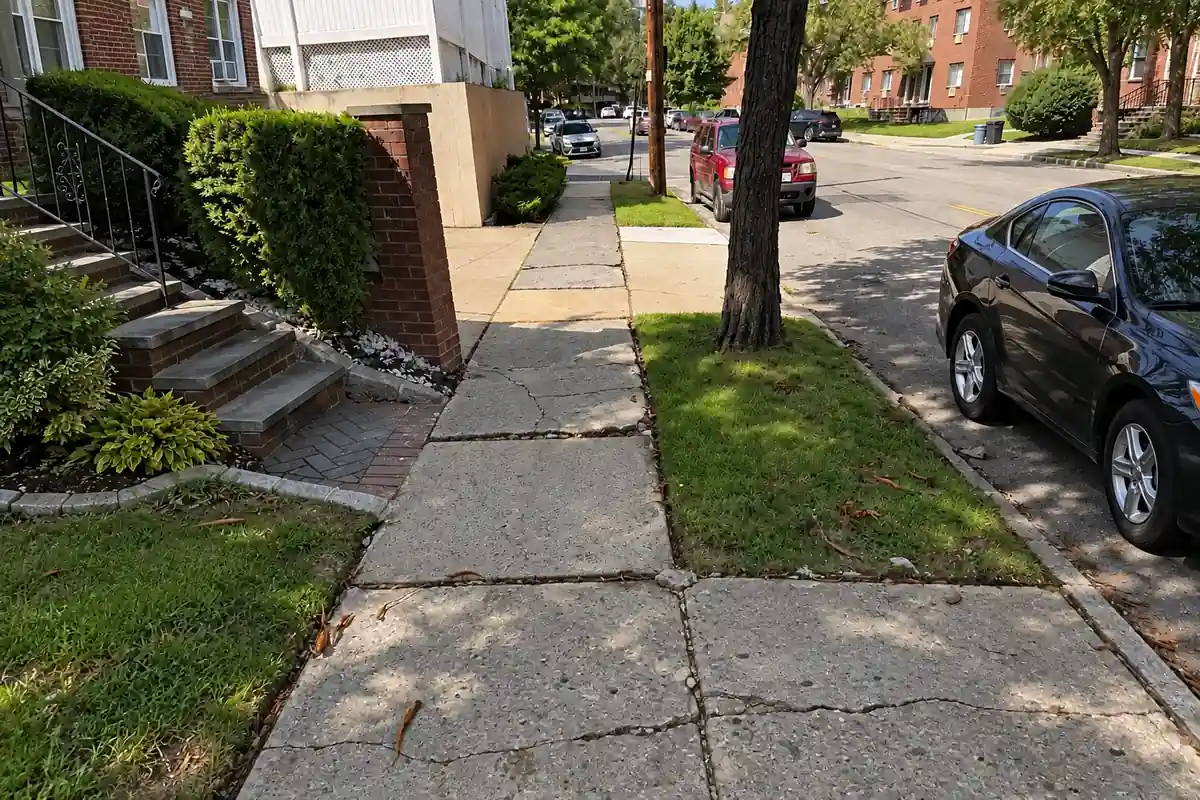
12 damaged concrete slabs affected by tree root uplift, regular pedestrian traffic, and general wear and tear
Total Repair Area
Approximately 300 sq. ft.
Services Provided
Sidewalk violation removal, damaged slab demolition, authorized root pruning, root barrier installation, fresh concrete replacement, control joint installation, broom finishing, permit coordination, dismissal inspection, and final NYC DOT sign-off
Permits & Requirements
NYC DOT Sidewalk Construction Permit, Sidewalk Closing Permit, 811 utility mark-out ticket, NYC Parks Tree Work Permit, plus permitting coordination associated with the property's curb-cut work
Project Cost
Approximately $5,700, including required permits
Project Timeline
Approximately 60 days, including permits, tree work coordination, construction, dismissal inspection, and final DOT sign-off
The Challenge: Tree Roots Had Lifted Multiple Sidewalk Slabs
The sidewalk outside 162-55 12th Ave in Whitestone, Queens, had developed several defective areas that ultimately resulted in an NYC sidewalk violation.
A total of 12 concrete slabs, covering approximately 300 square feet, needed attention.
The deterioration was not caused by one issue alone. Years of general wear and regular pedestrian use had affected the concrete, while expanding tree roots underneath portions of the sidewalk had pushed several slabs upward.
That root movement created uneven walking surfaces and made a straightforward concrete patch impractical. Simply pouring concrete over the affected areas would not have addressed the underlying problem.
The repair therefore required both sidewalk reconstruction and carefully coordinated tree-root work. Because the home is also a corner property, permit coordination was more involved than it would be for many standard mid-block residential sidewalk projects in Queens.
Our Approach
Urban Contractors NYC approached the project as a complete violation-correction job rather than simply replacing visibly cracked concrete.
The objective was to address the damaged slabs, manage the tree-root conditions underneath them, complete the work under the required permits, and take the project through the DOT dismissal process.
Sidewalk Assessment and Violation Review
We first reviewed the affected sidewalk frontage and identified the slabs that needed replacement.
Twelve slabs, totaling approximately 300 sq. ft., showed conditions including:
- Tree-root uplift
- Uneven slab elevations
- Surface deterioration
- Wear from pedestrian traffic
- General aging of the existing concrete
The repair limits were established before demolition so that the permit scope and construction area could be coordinated correctly.
Permit and Utility Coordination
Before demolition began, the required permits and approvals were coordinated.
The project included:
- NYC DOT Sidewalk Construction Permit
- Sidewalk Closing Permit
- 811 utility mark-out ticket
- NYC Parks Tree Work Permit
- Additional coordination associated with the corner property's curb-cut conditions
NYC DOT specifically notes that multiple sidewalk permits may be necessary when work is performed at a corner property, making permitting more involved than for many single-frontage lots.
Curb-cut work can add another layer. NYC DOB regulates curb cuts and requires approval of the proposed project, while applicable sidewalk and curb permits are handled through DOT.
Removing the Damaged Concrete
Once the required approvals and utility markings were in place, the damaged concrete slabs were carefully demolished and removed. This exposed the underlying base and the tree roots responsible for lifting portions of the sidewalk.
Removing the concrete first allowed the crew to see the actual root conditions rather than making assumptions based only on what was visible from the surface.
Authorized Root Pruning
Tree roots affecting the sidewalk were addressed under the appropriate tree-work authorization. Root work around NYC street trees must be handled carefully. NYC Parks requires authorization for regulated work involving street trees, including pruning performed by private contractors.
Where permitted and appropriate, interfering roots were selectively pruned to help create sufficient space for reconstruction while avoiding unnecessary damage to the tree. The goal was not simply to cut roots back aggressively. It was to correct the sidewalk condition while protecting the long-term health and stability of the tree.
Installing a Root Barrier
After the authorized root work was completed, a root barrier was installed between the tree-root zone and the reconstructed sidewalk area.
This additional step was important because replacing the concrete alone would not address future root movement. The barrier helps redirect future root growth away from the new sidewalk and can reduce the likelihood of the same slabs being pushed upward again.
Preparing the Sidewalk Base
The exposed area was cleaned and prepared before new concrete was placed.
Proper preparation is critical because even good concrete can eventually move, settle, or crack when installed over an unstable base. The repair area was brought to the proper grade and prepared to provide consistent support for the replacement slabs.
Pouring Fresh Concrete
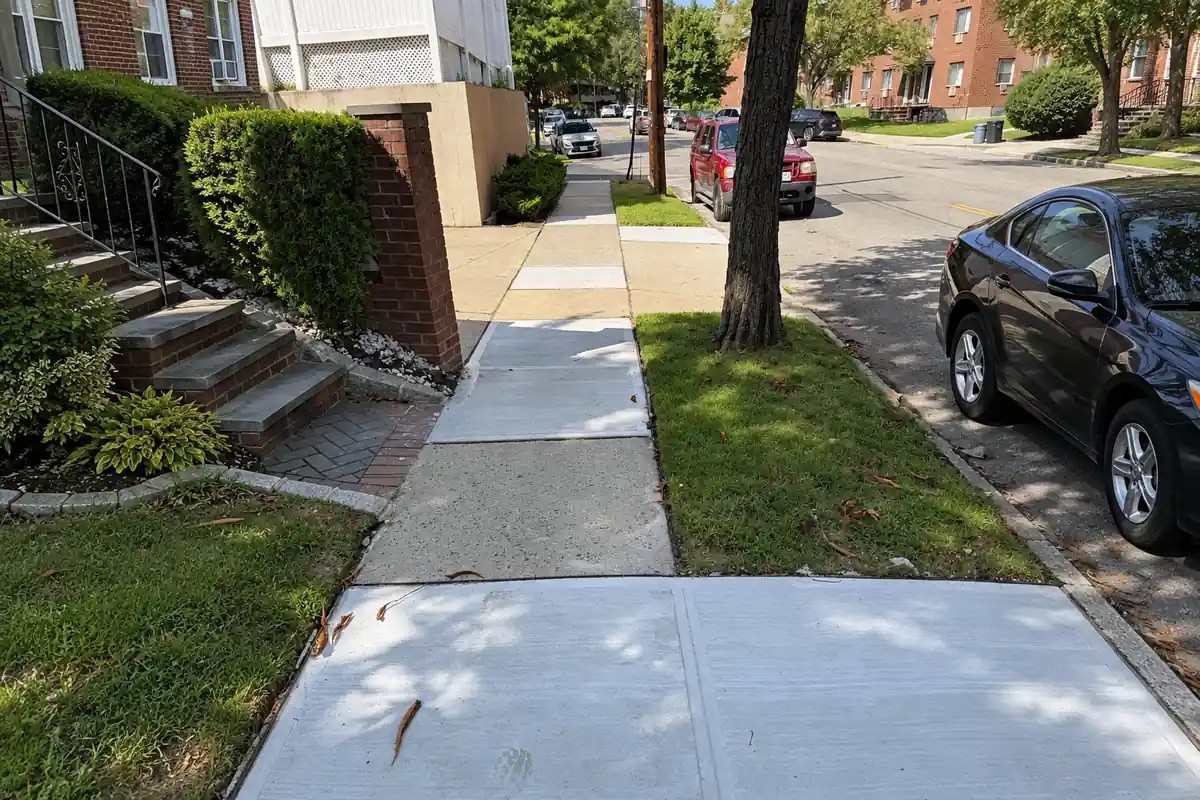
Fresh concrete was then poured throughout the approximately 300-square-foot repair area.
The new sidewalk sections were formed to restore a smooth, continuous walking surface while maintaining the appropriate relationship with the surrounding existing sidewalk. Rather than leaving isolated patches, the affected slabs were reconstructed to create a cleaner and more uniform finished frontage.
Installing Proper Control Joints
Control joints were incorporated into the new concrete.
These joints give concrete planned locations where normal shrinkage and movement can occur, helping reduce random cracking across the finished slabs.
Their placement also restored the organized slab pattern expected on a properly constructed NYC sidewalk.
Applying the Broom Finish
Before curing, the new sidewalk received a broom finish. The textured surface provides better traction than an overly smooth concrete finish and gives the repaired sidewalk the familiar appearance of a professionally finished concrete walkway. The completed surface was left clean, uniform, and suitable for regular pedestrian use.
Final Inspection and Violation Dismissal
Completing the concrete work did not automatically close the sidewalk violation. After construction, the project moved into the dismissal inspection and DOT sign-off process.
NYC DOT instructs property owners to request a dismissal inspection after violation-related sidewalk repairs have been completed. Urban Contractors NYC coordinated the final stages so the completed repair could be reviewed and the violation cleared once the work was accepted. From initial permitting through final sign-off, the overall process took approximately 60 days.
What Made This Queens Sidewalk Project Different?
Many Queens sidewalk violation projects involve replacing a few damaged slabs along a single straight property frontage.
This project was more involved for several reasons.
It Was a Corner Property
The home's corner location meant there was more right-of-way and permit coordination to consider than with a typical mid-block property. NYC DOT specifically warns that corner properties may require more than one sidewalk permit when work extends along multiple sides of the property. That makes identifying the correct repair limits before filing especially important.
Tree Roots Were Part of the Problem
The violation could not be responsibly corrected by replacing concrete alone. Tree roots underneath the sidewalk had contributed to slab uplift, so the project required coordination of:
- Tree Work Permit
- Authorized root pruning
- Root barrier installation
- Concrete reconstruction
This made the project both a sidewalk violation repair and a tree-root mitigation project.
Curb-Cut Coordination Added Another Permit Layer
The property's curb-cut conditions added further coordination beyond the standard sidewalk permits. NYC DOB regulates curb-cut projects, while DOT has separate requirements for work involving sidewalks and curbs. That agency overlap can make corner and driveway-related projects considerably more complicated than replacing concrete on an ordinary residential sidewalk frontage.
The Job Continued Through Final DOT Sign-Off
Our involvement did not stop when the concrete hardened. The project included coordination through the dismissal inspection and final violation sign-off, giving the property owner a complete path from damaged sidewalk to violation clearance.
Project Results
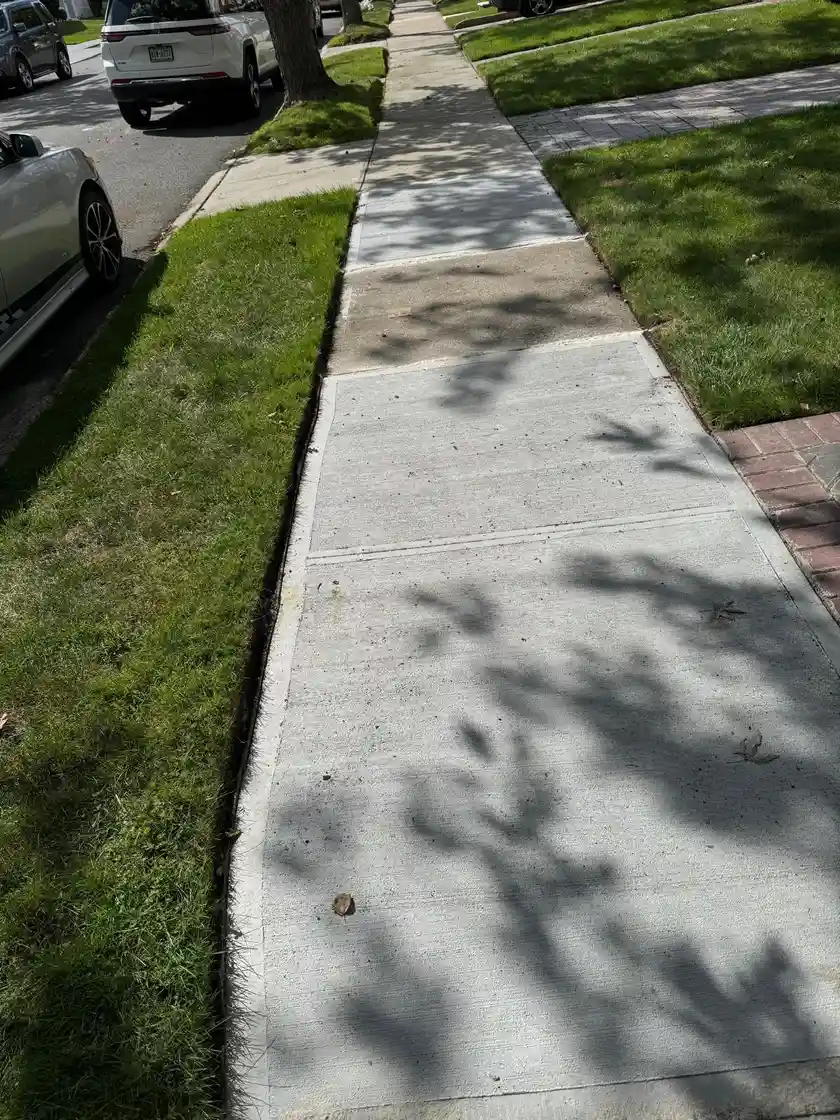
By the end of the project, approximately 300 square feet of deteriorated sidewalk had been reconstructed, covering all 12 affected slabs.
The completed work included:
- 12 newly replaced concrete sidewalk slabs
- Approximately 300 sq. ft. of reconstructed sidewalk
- Tree-root-related defects addressed
- Authorized root pruning completed
- Root barrier installed
- Fresh concrete poured
- Control joints installed
- Broom-finished surface completed
- Required permits coordinated
- DOT dismissal inspection coordinated
- Final sidewalk violation sign-off completed
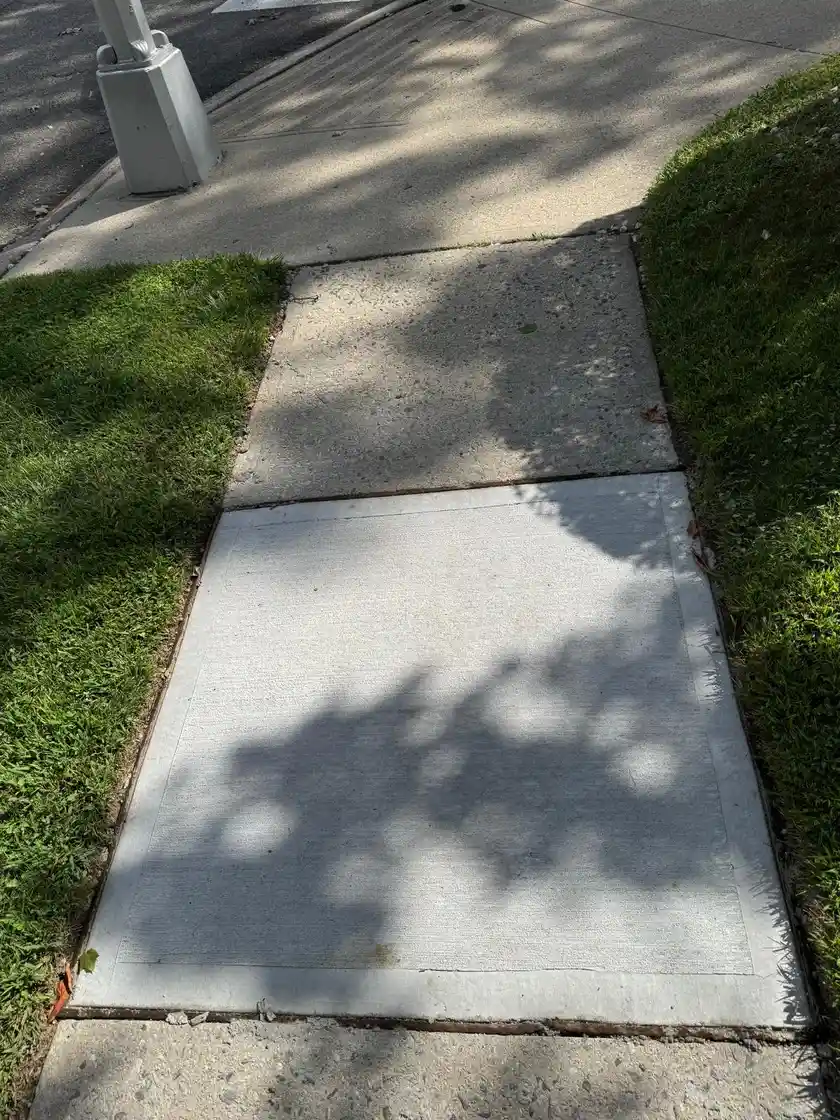
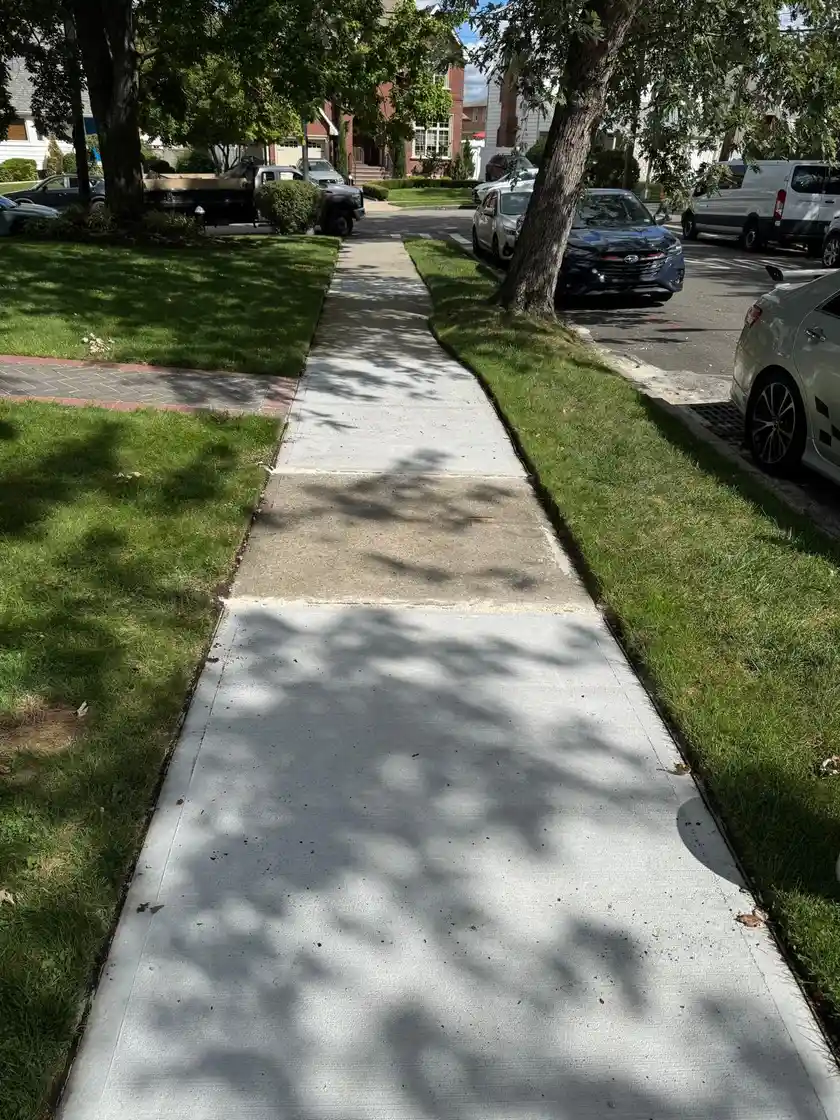
The total project cost was approximately $5,700, including required permits, with the full permit-to-dismissal process taking approximately 60 days.
Client Testimonial
“We had a sidewalk violation along with tree roots lifting several sections of concrete, and being on a corner property made the permit process more complicated than we expected. Urban Contractors NYC handled the permits, root work, concrete replacement, and DOT inspection from start to finish. The new sidewalk looks clean and even, and having the violation cleared without having to coordinate everything ourselves made the process much easier.”
Frequently Asked Questions
A total of 12 damaged concrete slabs were replaced, covering approximately 300 square feet of sidewalk.
The damage resulted from a combination of tree-root uplift, normal pedestrian traffic, and general wear and tear. Tree roots had pushed portions of the existing sidewalk upward, creating uneven slabs.
Usually, that does not address the underlying cause. The affected concrete generally needs to be removed so the root conditions and base can be evaluated. Any regulated street-tree root work must also be properly authorized.
Yes. A NYC Parks Tree Work Permit was included because tree-root work was part of the repair scope. NYC Parks regulates work involving City street trees.
The root barrier was installed to help redirect future root growth away from the newly reconstructed sidewalk. It adds a preventive element to the repair rather than simply replacing the slabs and leaving the original root condition unaddressed.
Corner properties can have sidewalk frontage on more than one street. NYC DOT states that multiple sidewalk permits may be necessary when sidewalk work is performed on multiple sides of a corner property.
The NYC Department of Buildings regulates curb-cut projects, while DOT also requires applicable sidewalk and curb permits for the work.
The approximate project cost was $5,700, including the required permits.
Actual sidewalk repair costs vary depending on repair area, tree-root involvement, concrete thickness, permits, access conditions, curb or driveway work, and other site-specific requirements.
The full project took approximately 60 days, including permit coordination, tree work, sidewalk replacement, the DOT dismissal inspection, and final sign-off.
No. After repairs are completed, a dismissal inspection must be requested so NYC DOT can confirm that the defective conditions have been corrected.
Have a Sidewalk Violation or Tree Root Damage in Queens?
A sidewalk violation can become more complicated when the property has tree-root damage, a corner location, a driveway, or a curb cut.
Urban Contractors NYC can coordinate the project from the initial sidewalk assessment through permits, concrete replacement, tree-root-related work, and the final DOT dismissal process.
Whether you have a few cracked slabs or a larger corner-property violation, the goal is to correct the actual cause of the sidewalk defect and complete the work according to NYC requirements.
Need help with a sidewalk violation in Queens?
Contact Urban Contractors NYC to schedule an assessment and discuss the permits, repair scope, estimated cost, and violation-removal process for your property.